
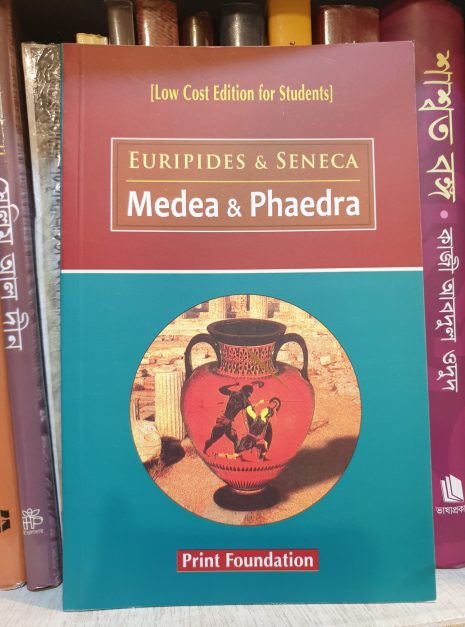
Medea & Phaedra – Euripides & Seneca | Friends’BookCorner
প্রিন্ট / প্রকাশনী: FriendsBook
- Estimated Delivery : Up to 4 business days
- Free Shipping & Returns : On all orders over $200

| Title | Medea & Phaedra |
|---|---|
| Authors | Euripides & Seneca |
| Category | Greek Tragedy / Roman Tragedy / Classic Drama |
| Publisher | Penguin Classics / Oxford / Various |
| Edition | Paperback |
| Language | English (translated from Greek & Latin) |
| Pages | 208 (may vary by edition) |
| ISBN | 9780140449297 (Penguin Classics) |
| Country | Greece / Rome |
Book Summary
Medea & Phaedra by Euripides & Seneca brings together two of the most powerful and influential tragedies from the ancient world. Both plays, though written centuries apart and in different civilizations, explore timeless themes of passion, betrayal, revenge, and the tragic consequences of human desire.
In Medea (by Euripides), the brilliant and wronged heroine takes a terrible vengeance on her unfaithful husband Jason, challenging the roles and expectations of women in ancient Greek society. The play’s intensity, psychological insight, and shocking climax have made it a touchstone of world drama.
Phaedra is presented in both Greek (by Euripides, as Hippolytus) and Roman (by Seneca) versions, focusing on a queen tormented by forbidden love for her stepson. Both versions grapple with fate, morality, and the destructive power of suppressed passion. Seneca’s Latin tragedy, in particular, influenced later European drama and the development of the revenge tragedy genre.
- Essential texts for understanding the roots of Western tragedy and theatre.
- Explores profound questions of morality, gender, and destiny.
- Richly layered with myth, philosophy, and human psychology.
- Frequently studied, performed, and reimagined in modern literature and theatre.
Why Read These Tragedies?
- Classic works that shaped European drama, literature, and thought.
- Ideal for students, teachers, and enthusiasts of ancient and world literature.
- Offer deep insight into human passion, suffering, and the limits of justice and revenge.
- Stimulate critical discussion on ethics, gender, and the power of myth.
About the Authors
Euripides (c. 480–406 BC) was one of the three great tragedians of classical Athens, celebrated for his psychological realism and complex female characters. Wikipedia: Euripides | Goodreads: Euripides
Seneca (c. 4 BC–65 AD), a Roman philosopher, dramatist, and statesman, brought Stoic philosophy and Latin eloquence to tragedy. Wikipedia: Seneca | Goodreads: Seneca
Related Books Category
Learn More
📞 For order & details: 09696120972
Be the first to review “Medea & Phaedra – Euripides & Seneca | Friends’BookCorner”
Related products
One arranged marriage murder – Chetan Bhagat (HC) | সফাপ্রকাশনী
Original price was: 400৳.260৳Current price is: 260৳.






Reviews
There are no reviews yet.